
Zulfikar Ali Bhutto, the founder of the Pakistan People’s Party and former Prime Minister, was executed in 1979 after a highly controversial legal process.
In 2024, the Supreme Court of Pakistan issued an opinion stating that Bhutto did not receive a fair trial and acknowledged that the original proceedings failed to meet the requirements of due process.
This is known as lawfare, the use of legal systems and institutions to damage a political opponent.
In Bhutto’s time, the goal of the Pakistani military regime was his physical and political removal. In modern democracies like South Africa, the goal is often political disqualification.
Because under the South African Constitution, a specific court sentence can disqualify someone from being a Member of Parliament, this gives the opponents of a politician room to use the courts to stifle him.
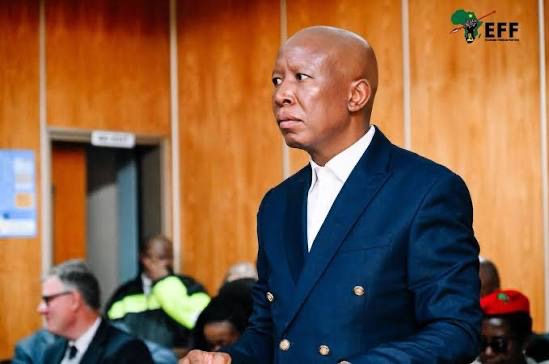
Naturally, Julius Malema has argued that the court cases against him are intended to drain his party’s resources and distract him from political organising. This is not dissimilar to the strategy effectively deployed by Pakistan against Bhutto, keeping him tied up in various legal manoeuvres.
Similarly, as Malema faces sentencing, his legal team is actively arguing that the prosecution is a “kill” attempt, which is a very similar language to Bhutto’s supporters, arguing that the law is being used to try and “behead” the leadership of the EFF.
Unlike 1970s Pakistan, South Africa’s judiciary has a much stronger reputation for independence, which makes it difficult to make a case of lawfare being carried out in its chambers.
However, most importantly, the risk, as with the Bhutto 2024 “mea culpa”, is that when courts are used to settle political scores, the legitimacy of the law itself takes a hit, because if the public begins to see a judge’s verdict as just another political vote, the “neutral” ground required to continue pretending you have a democracy starts to erode.
In Bhutto’s case, it took 45 years for the court to admit it was wrong. In Malema’s case, the drama is still unfolding in real-time, testing whether the South African legal system can remain a neutral arbiter or if it will be swallowed by the political noise.
Now, Malema’s opponents point out that he did fire the weapon and that this is a crime. Period. They say this as if it removes all doubt about it being politically motivated. But people who reason like this are deliberately and cynically missing the point because lawfare is precisely when real events are selectively prosecuted and pursued with a vigour disproportionate to how similar cases are handled.
So, the question about Malema’s firearm charge case is not whether he discharged a rifle or not. The real revealing question is that of all the things that happen, why this, why now, why him? And the answer is quite clearly political.
This is unfortunately an impossible case to make in a South African courtroom, which is, of course, part of the point. Just ask Jacob Zuma and Ace Magashule.